DMXAPI is an API aggregation service that puts more than 300 multimodal models behind a single OpenAI-compatible endpoint, billed in renminbi, with overseas models discounted by up to 30 percent. It does not train models; it buys capacity in bulk and wraps it in engineering features - endpoint testing, error analysis, usage monitoring - and states that customer data is never stored.
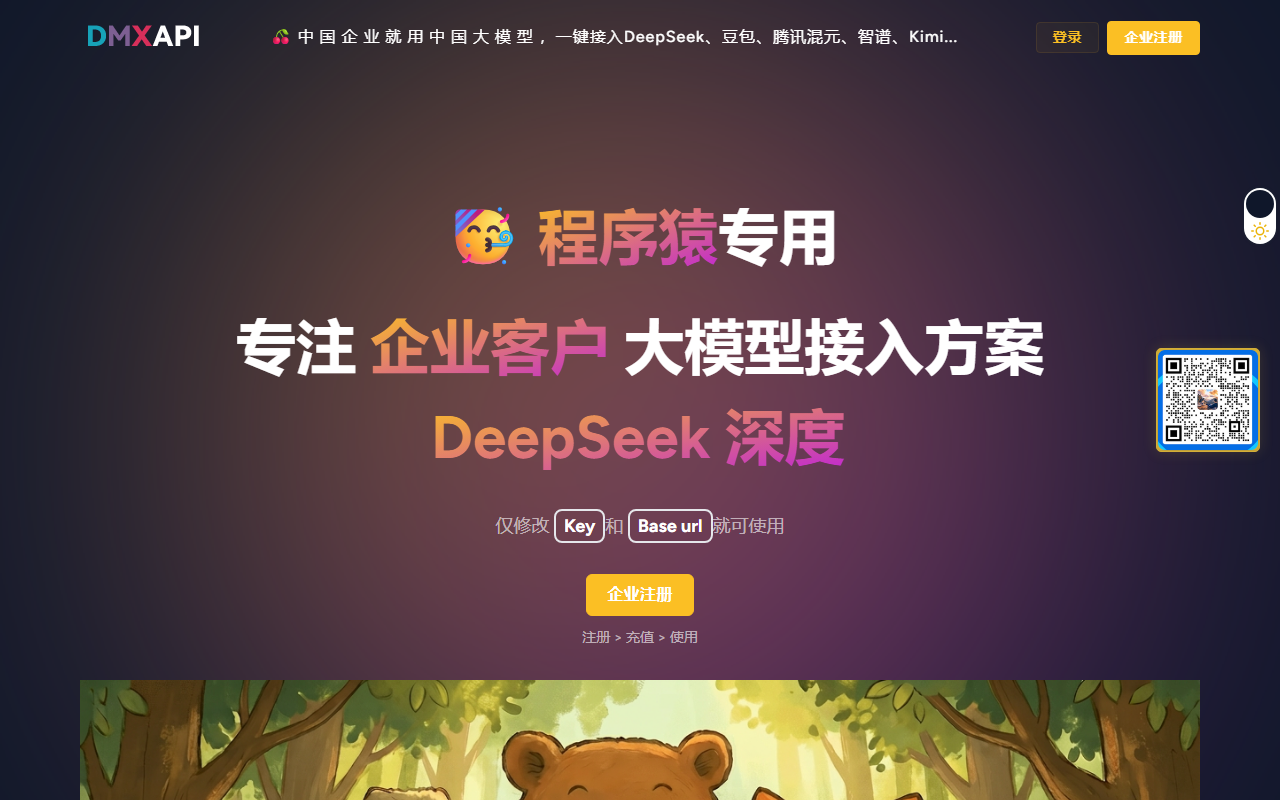
DMXAPI: one API key for more than 300 multimodal models
DMXAPI is an API aggregation platform built by the LangChain Chinese community. The pitch is narrow and practical: instead of opening a separate account and writing a separate integration for every model vendor, developers get one key that reaches more than 300 multimodal models from China and abroad. Pricing is in renminbi, the catalogue spans text, image, video and audio generation, and the platform advertises unlimited RPM/TPM with unlimited concurrency for enterprise accounts. For teams that want to validate an idea without spending two weeks on integration work, the value of this layer sits in the plumbing rather than in the models themselves.
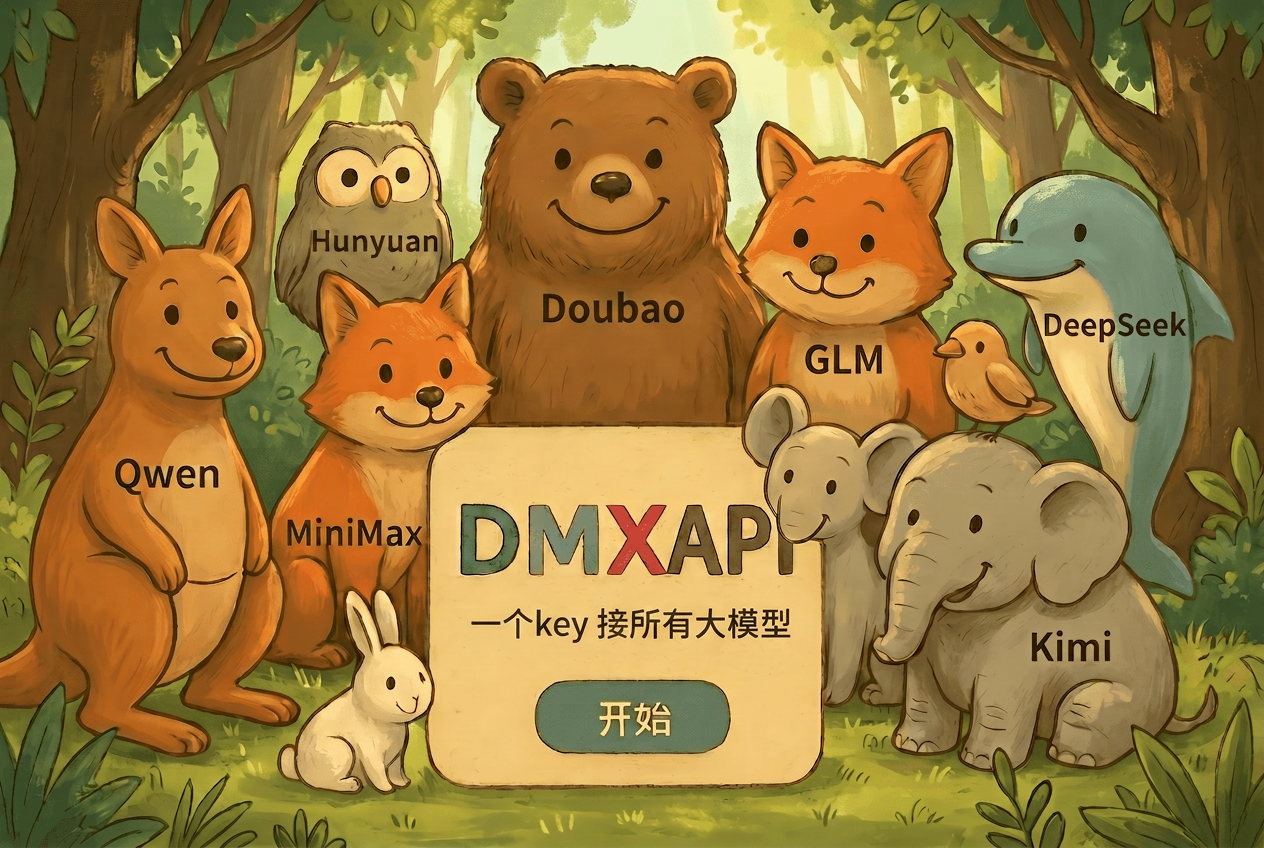
The old problem with multi-model development is fragmentation. Every vendor ships a different protocol, authentication scheme and billing unit, so switching models usually means rewriting code, and overseas models add cross-border payment and currency handling. DMXAPI pulls those differences behind a single gateway: one interface, fully compatible with the OpenAI API protocol, so an application already written to OpenAI conventions can move over by changing the base URL and key.
The platform does not train models. Its role is channel plus engineering: it buys inference capacity from model vendors in bulk and resells it to developers in renminbi, with overseas models discounted by up to 30 percent. On the engineering side it offers a high-concurrency architecture, usage monitoring, and two helper tools - an endpoint testing console and an error analysis page for diagnosing failed responses. At the data layer it states that no customer data is stored.
What DMXAPI provides
Multimodal model aggregation
More than 300 models from Chinese and international vendors, covering text, image, video and audio generation. One account and one key span the whole catalogue, so a combined multimodal application does not need a separate supplier for each capability.
OpenAI protocol compatibility
Fully compatible with the OpenAI API protocol, which means an existing OpenAI application moves over by swapping the base URL and key while keeping request and response shapes. This is the most practical feature of any aggregation layer, because it determines how cheap migration really is.
Renminbi billing, global reach
All usage is settled in renminbi with direct connections to domestic and overseas models, removing cross-border payment, currency conversion and foreign account requirements. Budgeting and reimbursement also get simpler for Chinese teams.
Unlimited RPM/TPM
The platform advertises unlimited requests and tokens per minute from registration, with unlimited concurrency for enterprise accounts. High-traffic workloads do not have to pre-compute quotas, although the sustainable rate still depends on the upstream vendor's capacity.
Cost optimisation
Buying inference capacity in bulk from model vendors lets it discount overseas models by up to 30 percent. For high-volume applications that per-call difference compounds into a meaningful monthly gap.
Data handling statement
Built on a high-concurrency architecture, with a stated policy of storing no customer data. For applications touching sensitive business information this should be checked against your own compliance requirements rather than accepted at face value.
Onboarding and debugging tools
An endpoint testing console plus an error analysis page. The first confirms parameters and response structure before you write code; the second helps locate the cause of a failed call and saves a fair amount of triage.
Enterprise and commercial support
One-to-one support, 24/7 availability, business-to-business payment and compliant invoicing through a standard commercial process - the part procurement teams actually need.
How to get started
- Register at dmxapi.cn, generate an API key in the console, and top up or complete the commercial onboarding.
- Filter the model list by modality: chat or writing models for text tasks, image generation for visuals, video generation for clips, audio generation for narration.
- Configure request parameters from the documentation - mainly the model name, input content and generation length. Naming follows OpenAI conventions, so porting existing code is a small change.
- Send one request through the testing console first to confirm authentication, parameters and response structure before wiring anything into production code.
- Replace the base URL and key inside your application, then run a regression pass focused on timeouts, retries and streaming output.
- After launch, watch usage and error rates in the console; when a call fails, paste the request and response into the error analysis page to locate the cause.
Pricing and billing
- All usage is billed in renminbi; no dollar account or cross-border channel is required.
- Overseas models are discounted by up to 30 percent off list price; the exact rate varies by model and procurement, so the console quote is authoritative.
- The source material does not publish a per-model price table by token or by call, so real costs must be confirmed in the console or a commercial quote.
- Business-to-business payment and invoicing are supported, which suits teams that must follow a procurement process.
Who it suits
- Product teams that need text, image, video and audio models together without maintaining four separate integrations.
- Developers with OpenAI-shaped code who want domestic models or a multi-model fallback at low migration cost.
- High-volume workloads sensitive to unit price that want bulk purchasing to lower spend.
- Teams without overseas payment channels that still need foreign models for comparison testing.
- Enterprises that need a contract and invoice before they can complete procurement.
Limits and caveats
- The platform is a channel, not a model owner: context length, capability boundaries and release cadence belong to the upstream vendor and cannot be changed here.
- Unlimited RPM/TPM is a platform-side statement. Actual throughput is still bounded by the selected vendor's concurrency, and peak hours may hit upstream rate limits.
- The source does not list the full model catalogue or unit prices; confirm each model's price and billing unit in the console before budgeting.
- The no-storage policy is the operator's declaration. Scenarios involving personal data or regulated industries should run their own security review and confirm processing terms in the contract.
- Availability of overseas models can be affected by network and policy conditions, so critical workloads should keep a domestic model as fallback.
- An aggregation layer adds a forwarding hop, which can introduce extra latency in extreme cases; latency-sensitive workloads should measure before committing.
Frequently asked questions
How is this different from calling vendor APIs directly?
A vendor API serves only its own models, each with its own protocol, authentication and billing. DMXAPI puts more than 300 models behind one OpenAI-compatible interface, billed in renminbi with a single key. The trade-off is an extra forwarding hop; model capability still comes from the vendor.
How much code has to change in an existing OpenAI project?
The protocol is fully OpenAI-compatible, so in most cases only the base URL and API key change while request and response structures stay the same. Model names must be replaced with the platform's identifiers, as documented.
Is RPM and TPM really unlimited?
The platform advertises unlimited requests and tokens per minute from registration, with unlimited concurrency for enterprise accounts. Requests are ultimately handled by upstream vendors, so sustainable throughput is still bounded by their capacity; load-test before relying on it.
Can I get an invoice and pay by bank transfer?
Public material states that business-to-business payment and compliant invoicing are supported through a standard commercial process, alongside one-to-one support and 24/7 availability. Contract terms and invoice types should be confirmed with the commercial team.
Is my data stored?
The platform states that no customer data is stored. That is a public commitment by the operator; if your workload involves personal or regulated data, complete your own compliance assessment and put data processing terms into the contract.

Frequently asked questions
How is this different from calling vendor APIs directly?
A vendor API serves only its own models, each with its own protocol, authentication and billing. DMXAPI puts more than 300 models behind one OpenAI-compatible interface, billed in renminbi with a single key. The trade-off is an extra forwarding hop; model capability still comes from the vendor.
How much code has to change in an existing OpenAI project?
The protocol is fully OpenAI-compatible, so in most cases only the base URL and API key change while request and response structures stay the same. Model names must be replaced with the platform's identifiers, as documented.
Is RPM and TPM really unlimited?
The platform advertises unlimited requests and tokens per minute from registration, with unlimited concurrency for enterprise accounts. Requests are ultimately handled by upstream vendors, so sustainable throughput is still bounded by their capacity; load-test before relying on it.
Can I get an invoice and pay by bank transfer?
Public material states that business-to-business payment and compliant invoicing are supported through a standard commercial process, alongside one-to-one support and 24/7 availability. Contract terms and invoice types should be confirmed with the commercial team.