
Lingya is an AI multimodal creator community from Tencent. It lets creators call several leading models in one place to produce images, video and music, then gain exposure and income through community publishing, job matching and Tencent Video revenue sharing.
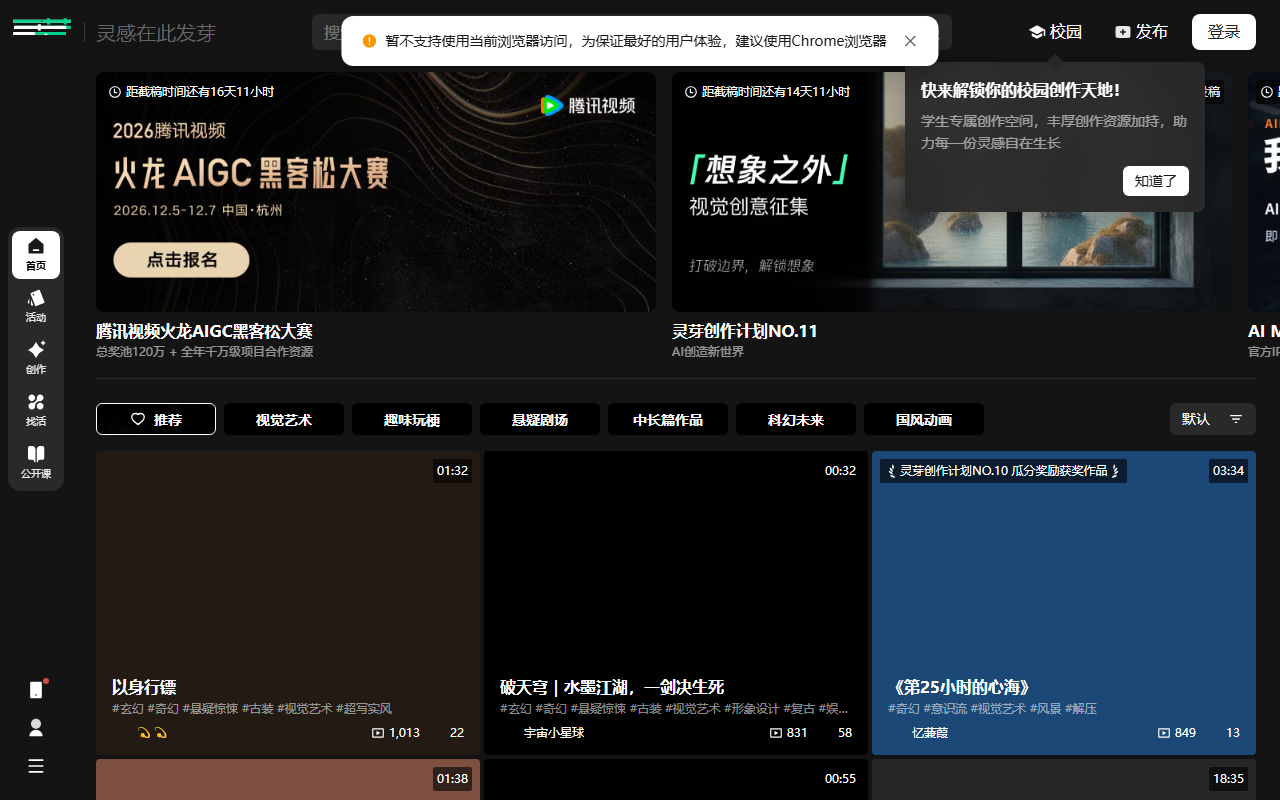
Lingya: The Multimodal AI Creator Community That Aggregates Top Models
Platform Overview
Lingya is an AI multimodal creator community from Tencent, available at https://lingya.qq.com/ . It brings together third-party video models such as Kling and Seedance, uses a credit-based consumption model, and supports AI generation across images, video, music, motion, assets and more. The community provides professional creation features including first-frame reference, intelligent storyboarding and multi-shot storytelling, and connects creators with production companies and brands, completing the path from AI production to revenue sharing on Tencent Video.
What sets Lingya apart from single-model tools is that it combines an aggregation layer with a community layer: on the production side you can switch between several leading models, and on the distribution side there are community showcases, competition exposure, freelance job matching and long-form video revenue sharing. For creators who want both good models and a clear destination for their work, this is more complete than calling a model on its own.
Key Capabilities
Multimodal creation engine: Aggregates leading models such as Kling and Seedance, covering six categories — image, video, music, motion, assets and projects — with on-demand switching between models.
Professional-grade video workflow: Supports first-frame reference, multi-shot storyboarding and
@file references, with fine-grained control over duration, aspect ratio and generation mode.Credit consumption and compliance: Billed per generation in credits, with differentiated pricing per model (public material gives an example of roughly 90 credits per generation). A mandatory compliance review prompt appears before generation.
Community ecosystem and commercial loop: A complete monetization path covering community publishing, competition exposure, job matching and revenue sharing when titles go live on Tencent Video.
How to Use It
Sign in: Visit the official site, register and log in.
Enter creation mode: Click the creation entry and choose a category in the top navigation (video, image, music, motion, assets or projects).
Choose a model: Switch engines in the left-hand model panel, for example Kling 3.0 or Seedance 2.0.
Configure parameters: Upload a first-frame reference image to lock in the style, write your prompt and use
@to reference files; after enabling multi-shot, pick intelligent or custom storyboard mode.Generate: Set duration, aspect ratio and generation mode, then generate and spend the corresponding credits.
Publish and monetize: Share finished work in the community or submit it to platform competitions for exposure; you can also take on projects from production companies and brands in the job plaza.
Core Strengths
Model aggregation: Public material describes it as the first domestic creation platform to integrate both the full Kling lineup and the full Seedance lineup, so creators do not have to jump between platforms.
Professional production capability: First-frame reference combined with multi-shot storyboarding and multiple model choices addresses film-grade AI short production needs.
Tencent ecosystem loop: Backed by Tencent Video's traffic pool and revenue-sharing system, works can reach a mainstream long-form video platform.
Industry-education integration: An AI film and television joint laboratory built with the Beijing Film Academy, cooperating on model development, competition awards and talent training.
Credit flexibility: Per-use billing lowers the entry barrier and avoids expensive subscriptions, which suits lightweight creators.
Use Cases
AI music videos and music shorts: Musicians use multi-shot storytelling plus first-frame reference to produce stylistically consistent videos quickly.
Advertising and brand films: Generate commercial assets with Seedance 2.0 / Kling 3.0, then monetize through the job plaza.
Film previsualization and concept design: Producers generate dynamic storyboard scripts to cut early-stage communication costs.
Short-video matrix operations: MCN agencies batch-produce content in different styles across multiple models for multi-platform distribution.
Student portfolio incubation: Film students build up a body of work through AIGC competition tracks and compete for platform contracts.
Frequently asked questions
What is Lingya and what is it used for?
Lingya is an AI multimodal creator community from Tencent, available at https://lingya.qq.com/ . It integrates third-party models such as Kling and Seedance, supports AI generation across six categories including image, video, music, motion, assets and projects, and offers community publishing, competition exposure, job matching and revenue sharing on Tencent Video.
How does Lingya charge for generation?
It bills per generation in credits, with differentiated pricing per model; public material gives an example of roughly 90 credits per generation. Per-use billing avoids expensive subscriptions, but the public material does not include a full price table or top-up methods, so check the platform's own documentation.
How is it different from an ordinary AI video generator?
The difference is model aggregation plus a commercial loop: public material describes it as the first domestic platform to integrate both the full Kling lineup and the full Seedance lineup, and it also supports professional workflows such as first-frame reference, multi-shot storyboarding and @ file references, plus a revenue-sharing path on Tencent Video.
What should I watch out for when using Lingya?
Generation consumes credits, so estimate cost before batch work. A mandatory compliance review runs before generation, so confirm rights for people, brands and copyrighted material. Job matching and revenue sharing depend on demand and work quality, and the platform does not promise earnings or placement.