Mao Yu Xing is a bedtime story app for children: you enter the child's details, it generates a fairy tale with that child as the protagonist, and voice characters plus a timed sleep mode carry them into sleep.
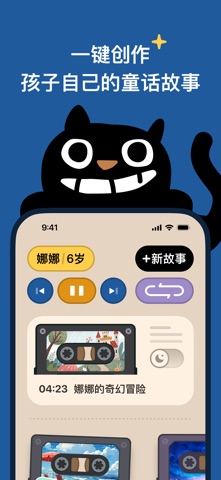
Mao Yu Xing: a bedtime story app that casts your child as the hero
Mao Yu Xing is a fairy-tale app built for children, and the problem it addresses is narrower than the usual "we have no stories to read" complaint. Children have limited patience for someone else's story but almost no resistance to their own. The app's central move is simple: it makes the child the protagonist.
You enter a few details about the child, and the app produces a short fairy tale in which that child is the one crossing the river, entering the forest, and facing a small danger. At bedtime, what the child hears is no longer a distant princess or dragon. It is their own adventure.
Why the protagonist swap matters
The appeal is identification rather than novelty. Between roughly three years old and the early school years, a child's sense of self is forming quickly, and a story carrying their own name holds attention far longer than the same plot with an unfamiliar hero. This is the practical reason a personalised tale can settle a restless child when a well-written book cannot.
What it offers
- Personalised story generation: you supply the child's details and pick a theme, and the app writes the adventure around that child rather than selecting a fixed title from a library.
- A spread of story themes covering different settings and situations, so a familiar structure keeps producing unfamiliar turns.
- Multiple voice characters, including Aunt Pingping, Uncle Haohao, Sister Deer and Little Rabbit, so dialogue is clearly attributed and the listening experience resembles a radio play more than flat narration.
- A sleep mode that pauses playback automatically at a time you set, so nobody has to stay by the bed waiting to switch it off.
- A deliberately narrow bedtime framing: same time, same app, same routine, which turns the session into a predictable signal that sleep comes next.
How to use it
- Install on an iPhone or iPad running iOS 13.4 or later and open the app.
- Enter the child's basic details to define the protagonist.
- Browse the themes and choose the direction for tonight's story.
- Generate the story and start playback, selecting a voice you like.
- When the bedtime window begins, enable sleep mode and set the pause time.
- Let playback stop on its own; there is nothing to switch off by hand once the child is asleep.
Who it suits
Households with children roughly three to ten years old, especially on the nights when the same picture book has been read three times and the adult's voice is giving out. It also helps families trying to build a stable bedtime routine: confining screen use to one clear, bounded session with a defined ending is easier to sustain than either a blanket ban or open access.
For specific transitions such as moving to a separate bed, starting preschool, or fear of the dark, choosing a matching theme adds something a generic story cannot. The child rehearses the situation once inside the story, with themselves at the centre.
Limits worth knowing
- It does not replace reading together. A generated story is one-way output; the questions, the responses, the emotional exchange that make shared reading valuable are still the adult's contribution.
- It is free to use, with no paywall. Free does not mean unlimited depth, though, and the range of themes and the quality of output follow the current version of the app.
- Screen time still needs managing. If a child becomes over-excited by the display itself, use audio playback so the screen stops being the focus once they lie down.
- Platform coverage is iOS 13.4 and above. Android users need a different solution for now.
The short version
The value here is not that software can write a story. It is that the app identified an overlooked requirement: children do not want a good story, they want a story that belongs to them. Change the hero to the child, and the hardest twenty minutes of the evening get noticeably easier.
Frequently asked questions
What is Mao Yu Xing and what ages is it for?
It is a fairy-tale app for children whose main function is generating a bedtime story with the child as the hero. It suits households with children roughly three to ten years old, particularly the bedtime slot where a familiar book has already been read many times.
How is a story created and what do I need to prepare?
You enter basic details about the child, choose a story theme, and the app writes an adventure around that child. There is no elaborate setup; the adult mainly supplies the protagonist details and the direction for that evening.
What does sleep mode do?
Once enabled, playback pauses automatically at the time you set, so nobody has to stay and switch it off. That helps with the usual bedtime negotiation: the ending is decided by the clock rather than by repeated persuasion, which children accept more readily.
Which voices are included, does it cost anything, and what devices run it?
Voice characters include Aunt Pingping, Uncle Haohao, Sister Deer and Little Rabbit, which makes dialogue easier to follow. The app is free, runs on iOS 13.4 and later, and Android devices are not currently covered.
Can it replace a parent reading aloud?
Not fully. Generated stories are one-way, without the questions, answers and emotional exchange that give shared reading its value. It works best as a backup for exhausted evenings rather than a replacement for reading together.