
Seedance suits content production teams and creators who need to batch-produce short videos for advertising, film, e-commerce, gaming, or education, require picture and voiceover/sound effects to be generated together, and need consistent characters across multiple shots.
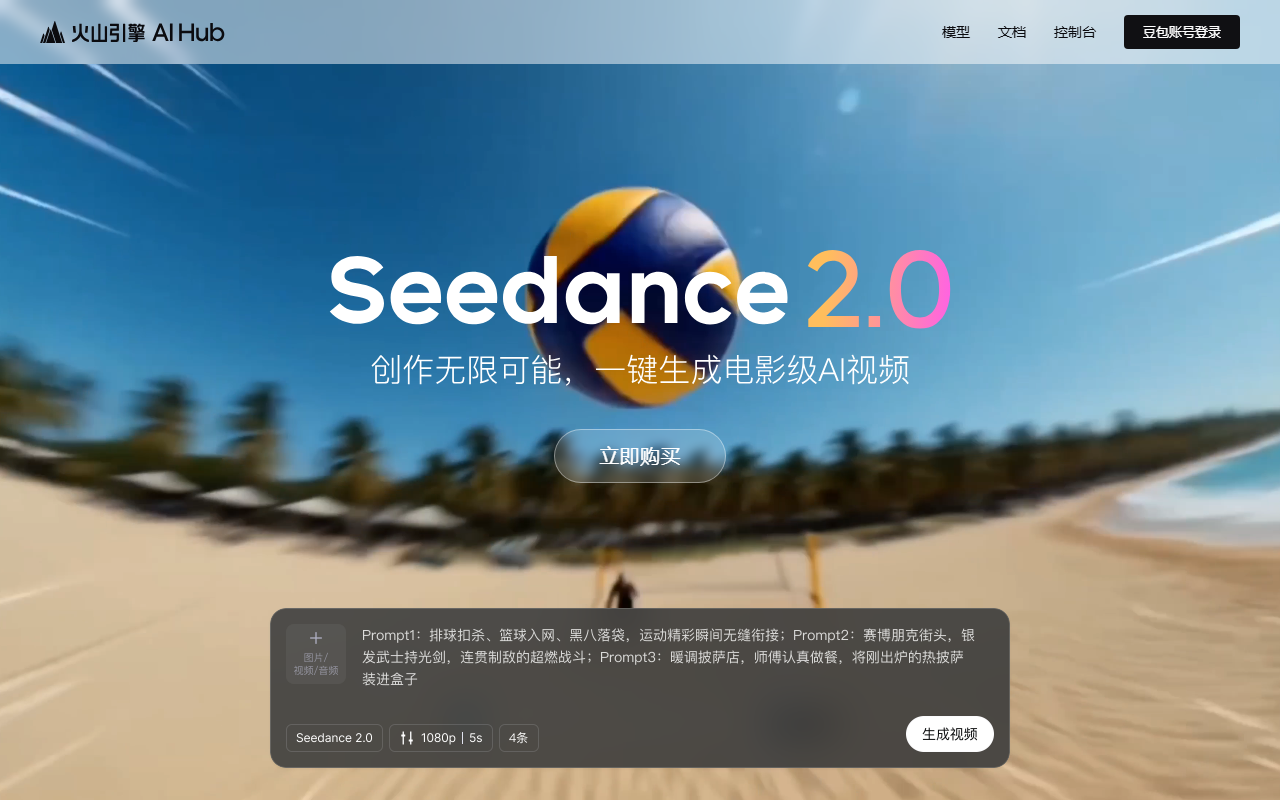
Seedance: A Multimodal AI Video Generation Model with Native Audio-Visual Sync
Seedance is a multimodal AI video generation model built on a unified architecture that jointly generates audio and video. The biggest difference between it and common video generation tools is that text, image, audio, and video are natively supported input modalities, and picture and sound are produced synchronously within a single generation run instead of generating silent footage first and adding audio afterwards. This means background music, sound effects, and lip-synced dialogue can be completed in one inference pass, and it also avoids the lip-sync drift and misplaced sound effects that are common in the two-step workflow of "generate visuals first, add audio later." It is built primarily for high-frequency content production in advertising, film and television, e-commerce, gaming, and education.
Main Features
Mixed Multimodal Input It supports combining text, 9 images, 3 video clips, and 3 audio clips in one request, and the "@mention" syntax precisely assigns the control target of each asset. This means mixed assets are no longer just "put together" — each one can be assigned its own purpose.
Native Audio-Visual Sync Generation Based on a dual-branch diffusion transformer, picture and audio run in parallel within the same generation pipeline, automatically outputting background music, sound effects, and multilingual lip-synced dialogue. The dialogue-to-lip synchronization happens in a single generation and requires no extra dubbing step.
Intelligent Video Extension and Editing Clips extend seamlessly in 5-second units while keeping character, lighting, and scene context consistent, and multi-shot narrative plus camera movement control are supported. Consistency during extension directly determines whether the finished piece holds together when watched through.
Character and Physics Consistency Constraints Human faces and body forms stay consistent across shots, and physics-penalty training simulates gravity, fluid, and collision behaviour. These two things are exactly what break most easily in multi-shot narrative.
Multi-Resolution Output Supports 480p, 720p, 1080p, and direct 2K/4K output, with video length covering standard clips of 4 to 15 seconds and a maximum of 60 seconds.
Industry-Oriented It primarily targets high-frequency content production scenarios such as advertising, film and television, e-commerce, gaming, and education, providing a video generation solution for businesses and creators.
How to Use
- Enter the access point and sign in: open the official usage entry and complete account sign-in.
- Choose a resource package: purchase the package that fits your needs. Packages are metered by tokens quota, are shared by individuals and enterprises, are valid for 90 days, are deducted proportionally to the token unit price, and automatically convert to pay-as-you-go after the quota is exhausted.
- Upload reference assets: enter the text prompt in the creation interface, upload image, video, or audio reference assets, and use the "@" syntax to mark the control target of each asset.
- Configure generation parameters: select the resolution (480p to 1080p) and duration (4 to 15 seconds), start the generation, and wait for the model output.
- Post-production and export: use the built-in editing tools to extend, add transitions, or fine-tune audio-visual alignment, then export the final piece; for batch needs, production can be integrated through the API.
Key Information and Requirements
- Model version: Seedance 2.0
- Resource package rules: shared by individuals and enterprises, valid for 90 days, deducted proportionally to the token unit price, and automatically convert to pay-as-you-go once exhausted
- Access methods: support console-based visual operation, API calls, and end-to-end collaboration
- Entry threshold: both individual and enterprise users can purchase resource packages directly, with no need to provision your own compute cluster
- Output specifications: resolution options of 480p / 720p / 1080p, video duration from 4 to 15 seconds, with direct 2K/4K output supported at the highest level
Resource Package Tiers
Packages are divided by token quota, are shared by individuals and enterprises, are valid for 90 days, all support 480p/720p/1080p multi-resolution output and 4 to 15 second duration settings, are deducted proportionally to the token unit price, and reach a maximum deduction ratio of about 1:1.8 across different resolutions and input modes.
- Lightweight Creation Package: 196 CNY, 7 million tokens quota, approximately enough to generate 28 480p videos
- All-Round Premium Package: 280 CNY, 10 million tokens quota, approximately enough to generate 40 480p videos
- High-Efficiency Mass Production Package: 364 CNY, 13 million tokens quota, approximately enough to generate 52 480p videos
The above reflects the pricing and quota figures recorded in the source material; specific tiers and prices are subject to the actual purchase page.
Core Advantages
- Integrated native audio-visual generation: picture and sound are produced simultaneously in a single inference pass, eliminating lip-sync drift and misplaced sound effects
- Industrial-grade control precision: control signals from up to 15 reference assets can be parsed at the same time, letting you direct characters, camera movement, action, and style like a director
- High usable-output rate: a higher usable-generation rate directly reduces the amount of manual correction in post-production
- Data feedback loop: built on large-scale short video content practice and data feedback, its understanding of highly shareable visual content keeps accumulating
- Flexible cost structure: offers on-demand cloud compute and tiered resource packages, allowing small and medium businesses to get started without heavy capital investment
How It Differs from Similar Tools
Similar video generation tools are generally not weak in reference control precision, and each has its own control approach — multimodal control, motion brush, scene control, and so on. The real dividing line lies in two points:
First, whether audio is natively generated. Some tools output silent video that requires post-production dubbing, which means audio-visual alignment must be done manually; Seedance brings audio into the same generation pipeline.
Second, output duration and physics simulation. The standard clips of most similar tools run between 10 and 30 seconds and require multiple stitching and extension passes; Seedance supports extension in 5-second units while keeping context coherent, up to 60 seconds. For physics simulation, some tools only perform basic motion and deformation simulation, whereas Seedance adds physics-penalty training to handle gravity, fluid, and collision.
Regarding Chinese semantics and lip-reading understanding, this class of models optimized for Chinese short video scenarios generally performs well; the cost threshold depends on the different combinations of free quota, subscription, or resource packages.
Use Cases
- Short video and social media batch production: marketing teams can build on a brand asset library to generate multiple 15-second placement shorts through text descriptions and reference videos
- E-commerce visual marketing: use image-to-video and cross-shot character consistency to turn static product images into model demonstration clips, keeping character appearance and scene style unified
- Multilingual localization production: with multilingual lip-shape synchronization, replace the lip movements and voice of the same video asset to adapt to different regional markets
- Film previsualization and creative storyboarding: generate storyboard drafts through text instructions and camera-movement reference videos to validate shot language before the actual shoot
Limitations and Notes
- AI-generated content does not guarantee factual or detail accuracy; footage involving brand marks, product appearance, and data statements needs manual verification.
- Audio-visual sync generation reduces the dubbing workload, but the generated speech content still needs to be checked against actual business wording.
- The asset count limit (9 images, 3 videos, 3 audio clips) restricts how much can be input at once in complex scenes; anything beyond that must be handled in batches.
- The "approximately XX 480p videos" conversion is based on a specific resolution and input mode; higher resolutions or complex inputs consume more quota.
- Prices, quotas, and resource package rules may change, so please refer to the actual purchase page.
- Commercial use must follow the platform's terms of service, and input involving third-party assets should be properly authorized.

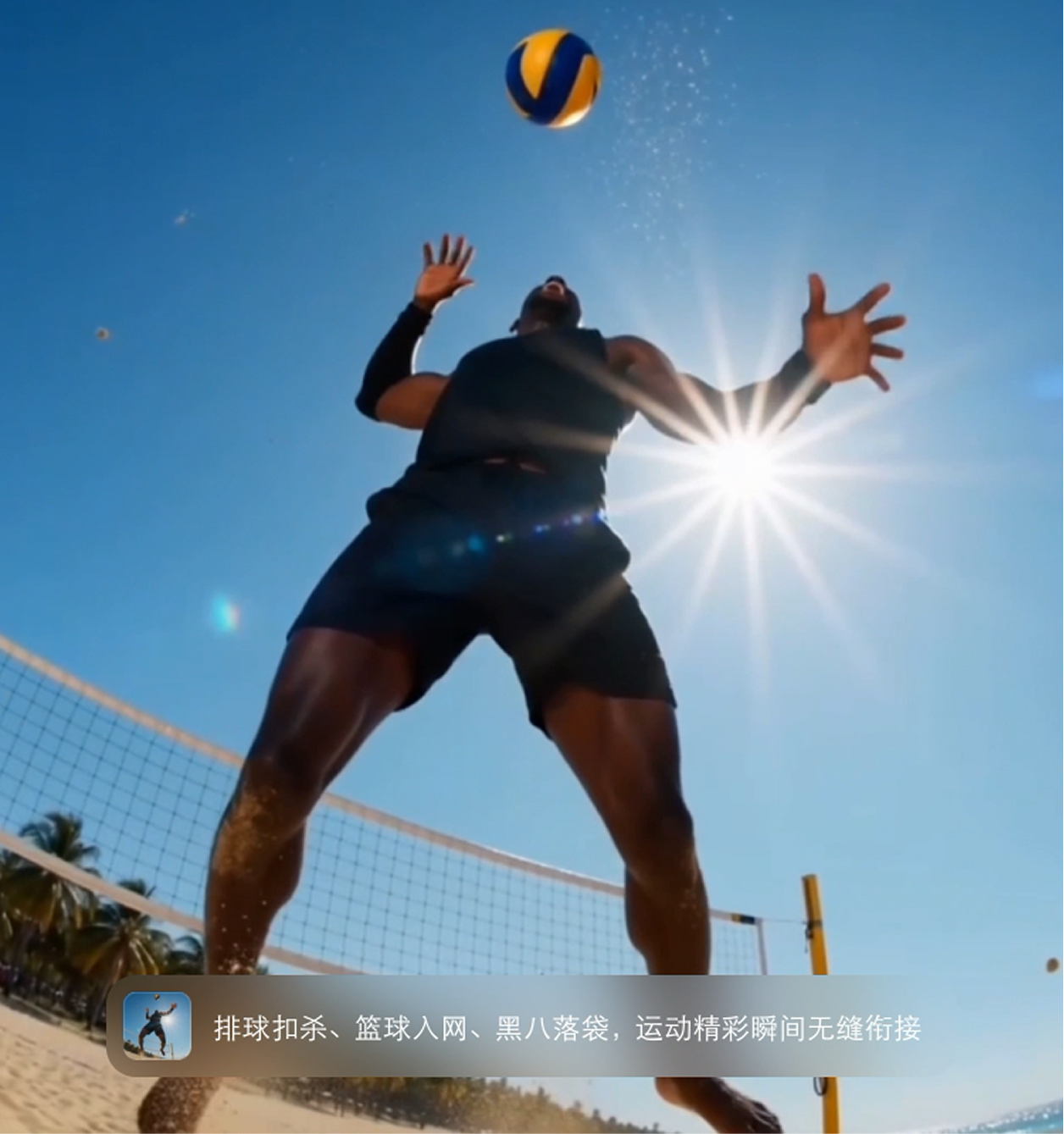
Frequently asked questions
How is Seedance different from common video generation tools?
The core difference is whether audio is natively generated. Seedance treats text, image, audio, and video as natively supported input modalities and produces picture and sound synchronously in one generation run, automatically outputting background music, sound effects, and multilingual lip-synced dialogue; some similar tools output silent video that requires post-production dubbing, making audio-visual alignment a manual task.
Which input methods and output specifications does Seedance support?
Inputs can combine text, 9 images, 3 video clips, and 3 audio clips, with @mention syntax to assign each asset a control target. Output resolution options are 480p, 720p, and 1080p, with direct 2K/4K output at the highest level; duration covers standard clips of 4 to 15 seconds, extensible in 5-second units up to 60 seconds.
What should I keep in mind when generating videos with Seedance?
AI-generated content does not guarantee factual or detail accuracy, so footage with brand marks, product appearance, or data needs manual verification; generated speech must be checked against actual business wording; the asset count limit constrains how much can be input at once; the video count conversion is based on a specific resolution and input mode, so higher resolutions or complex inputs consume more quota; and prices and package rules are subject to the actual purchase page.