YuanJing is an AI platform for producing video content. You submit a topic, style, target duration and character settings; the platform writes a creative script, generates storyboard stills, storyboard clips and music, then assembles the shot segments into a complete video with subtitles and narration.
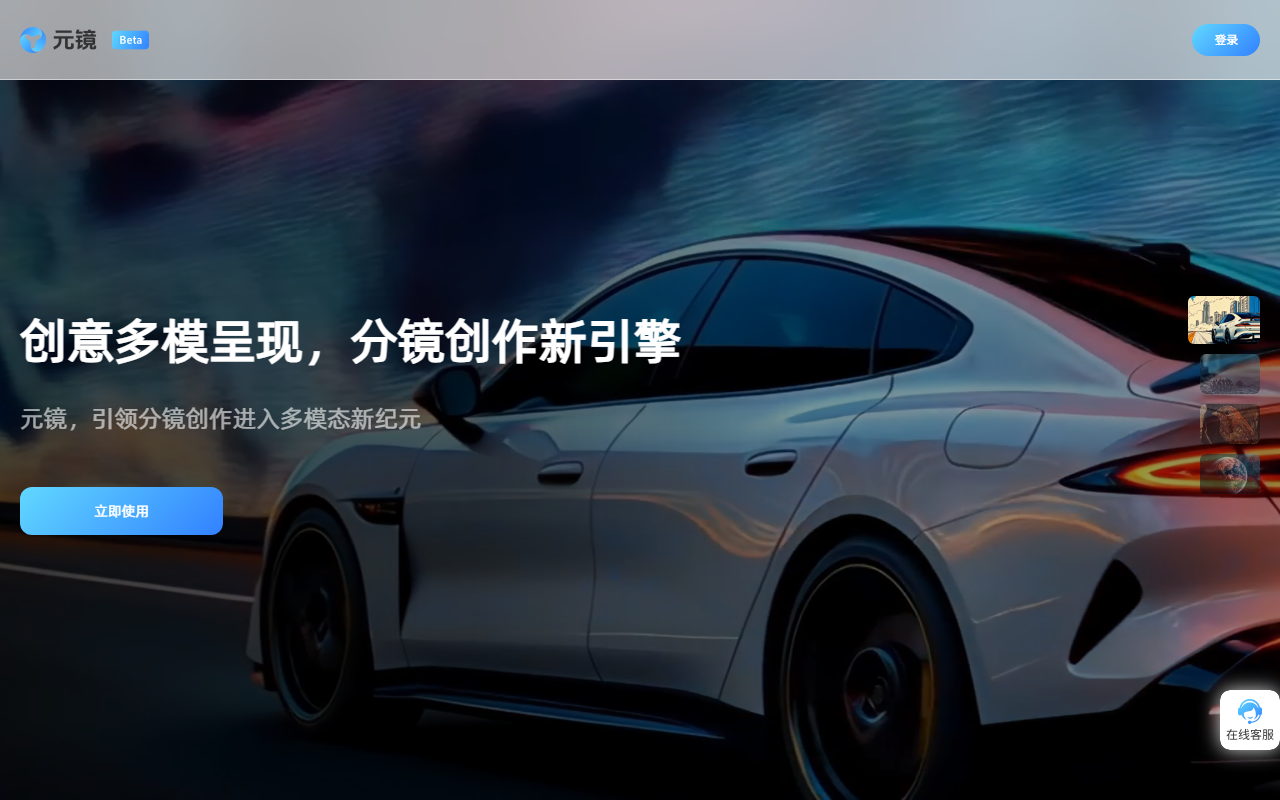
YuanJing: An AI Video Studio That Runs From Idea to Finished Cut
YuanJing is an AI video creation tool whose stated goal is to move a project from an idea to a publishable cut inside one semi-automated pipeline. It splits video production into three linked stages: script generation, multimodal storyboard design, and a storyboard assembly engine. Unlike a conventional editor, the platform treats character consistency as the organising principle of the workflow, so a single character keeps the same visual and vocal identity across every shot.
The practical problem YuanJing addresses is fragmentation. Writing a script, drawing storyboards, choosing music, editing and captioning usually happen in different tools and often with different people, and the visual style drifts at every handover. YuanJing keeps those steps inside one workspace and pushes one character definition through all of them, so continuity comes from the process rather than from frame-by-frame correction at the end.
It is aimed at producers with a concrete publishing target: brand and e-commerce shorts, course and explainer videos, public-service announcements. The value is not replacing a professional finishing artist. It is compressing the distance between nothing and a watchable cut down to minutes, so the creator spends time on creative judgement instead of assembly.
Main capabilities
Creative script generation
The platform turns a short brief into a usable video script, with character customisation and creative expansion, organised around the duration you request. The documented duration tiers are 15 seconds, 30 seconds and 1 minute; each tier carries a different narrative density, and the script adjusts how much information it loads so a 15-second cut is not overstuffed with selling points.
Multimodal storyboard design
Once the script is set, YuanJing produces a storyboard in several media at once: stills carry composition and character appearance, clips carry camera movement and timing, and music carries the emotional register. All three read the same character and style definition, which is how the platform keeps visual and auditory identity stable across shots.
Storyboard assembly engine
Generated segments are composited into a continuous video, with content filled in at the joins. Subtitle and narration generation are part of the same step. The finished cut can go straight to publishing, or you can return to the editing stage to rewrite subtitles, swap music or reorder shots.
Reusable production volume
Because scripting, storyboarding and assembly are all procedural, one character definition can be reused across many videos. For an account or a brand that publishes continuously, that is closer to how production actually works: establish a reusable character asset first, then produce against a list of topics.
How to use it
- Open the YuanJing website and complete registration and sign-in as prompted.
- Submit a creative brief: topic, style, target duration, character settings such as appearance and voice style, and a creative direction covering the storyline or the emotion to convey.
- Review the generated script for narrative structure, information order and fit with the requested duration; refine the brief and regenerate if needed.
- Move into storyboard design, where the platform returns stills, clips and music. Check that the same character holds its look and voice from shot to shot, and that the emotional tone matches the brief.
- Run the assembly step. The platform composites the segments, fills the transitions and produces subtitles and narration.
- Export and refine: the cut is ready to publish, or you can edit subtitles, replace music or regenerate individual shots before final output.
Pricing
- Gold tier: 179 CNY per month, 1,300 credits monthly, enough for 4,680 storyboard stills or 65 five-second storyboard clips. Single videos up to 60 seconds, fast generation queue, watermark-free output, early access to new features, image quality enhancement.
- Platinum tier: 349 CNY per month, 2,600 credits monthly, enough for 9,360 stills or 130 five-second clips. Single videos up to 60 seconds, dedicated fast queue, includes everything in Gold.
- Diamond tier: 829 CNY per month, 6,500 credits monthly, enough for 23,400 stills or 325 five-second clips. Single videos up to 60 seconds, dedicated fast queue, includes everything in the lower tiers.
- Credits are the shared consumption unit: stills and clips draw at different rates, and the equivalence figures above come from published descriptions. Actual deduction depends on the resolution and duration settings used at generation time.
Where it fits
- Short-form video: individual creators and brand marketing teams producing scripts and finished cuts quickly, especially accounts that must publish on a fixed rhythm.
- Advertising: custom scripts and storyboards matched to brand tone, producing deliverable ad spots across several placements and duration specs.
- Film previsualisation: turning a concept into an animated storyboard before principal photography, so a team can align and review early.
- Education: structured material such as lesson clips and explainer videos, split into knowledge points and then assembled.
- Public communication: policy explainers and public-interest campaigns with a fixed theme, produced against that theme.
Limitations
- A single video is capped at 60 seconds, so longer material has to be split into several videos or handled outside the tool.
- Credits are issued monthly. Running out means upgrading a tier or waiting for the next cycle, so estimate real per-video consumption before committing to high-volume output.
- Character consistency depends on reusing one character definition. Changing the appearance or voice description midway weakens continuity across shots.
- The source material does not state output resolution, commercial licensing terms or refund policy. Confirm current terms on the official site before commercial use.
- Generated output still needs human review. Factual claims, brand compliance and platform review rules are judgement calls that an automated assembly step cannot own.
FAQ
Is YuanJing suitable for someone with no editing experience?
It is approachable for beginners. Script, storyboard, assembly and subtitles sit on one path, so you do not need timeline or keyframe skills first. Producing something publishable still requires judging whether the script rhythm and the shots work, and that part is not automated.
How should I choose between 15 seconds, 30 seconds and 1 minute?
Fifteen seconds suits a single selling point or a strong hook, thirty seconds holds one small turn, and a full minute is where a complete short story fits. The shorter the cut, the earlier you must decide the one message that matters.
Can the storyboard be edited after it is generated?
Yes, and this is the cheapest place to change your mind. Adjusting a still or regenerating one segment costs far less than reworking a finished video, so confirm the shots before assembling the full cut.
Can the output be used commercially?
The source material does not detail commercial licensing, nor how resolution and watermark rules differ for commercial use. Confirm current terms on the official site, and check the footage for elements that require clearance.


Frequently asked questions
Is YuanJing suitable for someone with no editing experience?
It is approachable for beginners. Script, storyboard, assembly and subtitles sit on one path, so you do not need timeline or keyframe skills first. Producing something publishable still requires judging whether the script rhythm and the shots work, and that part is not automated.
How should I choose between 15 seconds, 30 seconds and 1 minute?
Fifteen seconds suits a single selling point or a strong hook, thirty seconds holds one small turn, and a full minute is where a complete short story fits. The shorter the cut, the earlier you must decide the one message that matters.
Can the storyboard be edited after it is generated?
Yes, and this is the cheapest place to change your mind. Adjusting a still or regenerating one segment costs far less than reworking a finished video, so confirm the shots before assembling the full cut.
Can the output be used commercially?
The source material does not detail commercial licensing, nor how resolution and watermark rules differ for commercial use. Confirm current terms on the official site, and check the footage for elements that require clearance.