KroWork is a desktop general AI agent launched by Kuaishou. After you describe your needs in natural language, it can autonomously break down tasks, invoke skills, write and execute code, and deliver a locally runnable application or document. It also supports turning workflows into reusable lightweight apps. Product website: https://krowork.com/%E3%80%82
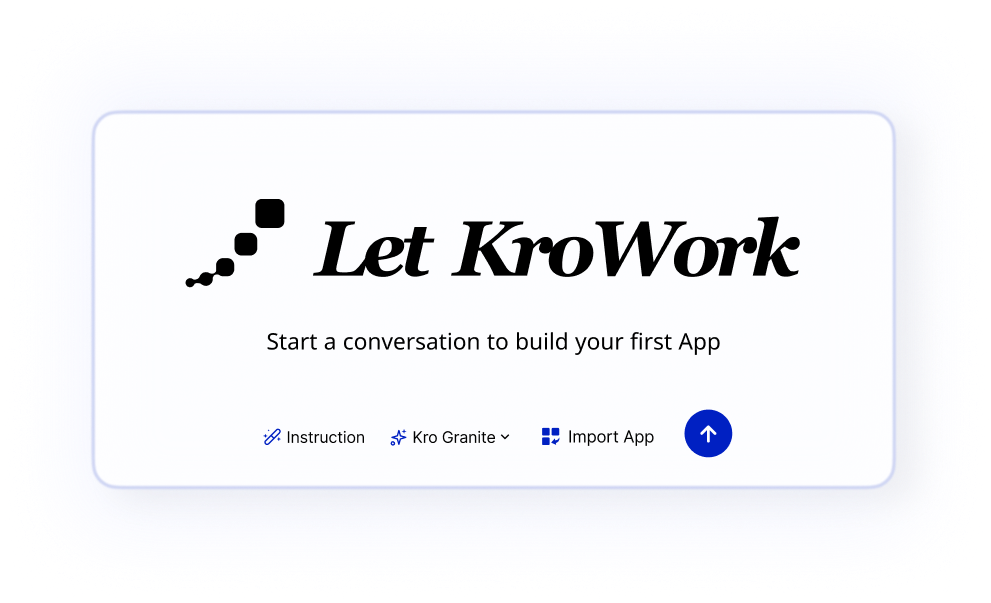
KroWork quick start: features, steps, and use cases for Kuaishou's desktop general AI agent
One-sentence answer
KroWork is a desktop general AI agent launched by Kuaishou. Users describe their needs in natural language; it can autonomously break down tasks, invoke skills, write and execute code, and deliver a locally runnable application or document. Official website: https://krowork.com/
Product positioning
KroWork is not positioned as a chatbot but as a delivery tool. It runs tasks on the local device, and the output is a runnable desktop app or document rather than just a reference answer.
It also emphasizes turning one-off successes into assets: once a workflow works, it can be saved as a lightweight app and reused with one click, so you don't have to rewrite prompts repeatedly.
Core features
Generate apps with natural language
Describe what you want in plain language—for example, a Pomodoro timer, a system monitor, or a meeting-room booking assistant—and the AI writes the code and deploys it as a runnable desktop app.
Execute complex tasks
For larger goals, KroWork first breaks them into subtasks, then invokes skills such as deep search, browser automation, and data analysis to complete tasks like generating PPTs or monitoring a code repository.
Turn workflows into reusable apps
Save repetitive tasks as lightweight apps and run them with one click, without spending credits again for the same workflow.
Operate local devices
It can directly operate files, browsers, and the system environment, and supports automatically installing missing components.
Three execution modes
- Default: Dangerous operations require manual approval.
- Automatic: The AI approves on your behalf.
- Fully allowed: Operations run directly except for destructive ones.
Multiple model support
The China edition supports Qwen, Kimi, and DeepSeek; the international edition supports OpenAI and Anthropic.
How to use KroWork
- Download and install: Visit the official website https://krowork.com/ to download the client, then choose the China or international edition and complete installation.
- Describe your request: In the chat interface, state your goal in natural language, such as "make a floating Pomodoro timer."
- Confirm the plan: Review the AI-generated task breakdown and execution plan, then confirm to start.
- Choose a mode: Select default, automatic, or fully allowed based on task risk.
- Review and iterate: Check the result in the sandbox, and use logs to give feedback so the AI can fix issues.
- Save the app: Save a satisfactory workflow as a lightweight app and add a desktop shortcut.
Use cases
- Smart office automation: automatically book meeting rooms, generate industry research PPTs, and monitor code repository updates.
- Desktop widget development: quickly generate personalized floating widgets such as Pomodoro timers and system resource monitors without writing code.
- Information monitoring and aggregation: periodically scan GitHub, news sites, or competitor activity, capture changes, and generate structured daily reports.
- File and document processing: organize the downloads folder, batch rename assets, and generate editable data reports.
- Recurring workflow automation: save fixed-format data processing, email sending, report generation, and similar processes as one-click apps for long-term reuse without repeated credit consumption.
Main advantages
- Local execution: Tasks run on the local device, so data stays on the machine, reducing privacy risks.
- Reusable: Once a workflow is saved as a lightweight app, you can run it with one click next time, without rewriting prompts or spending credits again.
- Transparent by design: Every AI action can be reviewed, and the system supports self-diagnosis and repair based on local logs.
- Tiered access control: Operations run in an isolated sandbox with three permission modes, balancing efficiency and safety.
- Model choice: The China and international editions connect to different model services, allowing you to choose based on your environment.
Limitations and cautions
The following three points are not official limitations, but verification reminders based on the available facts:
- The fact sheet does not disclose KroWork's pricing, credit consumption rules, supported operating systems, or interface language. Check the official website before use.
- "Fully allowed" mode skips manual approval and directly executes all operations except destructive ones. It is recommended only for low-risk, reversible tasks.
- Tasks run locally, so actual results depend on your machine's environment and resources. Even with automatic installation of missing components, environment dependency issues may still occur.
Pricing and version verification note
This fact sheet does not provide KroWork's official pricing, subscription model, or credit rules, so this article does not infer any pricing. Please refer to the current information on the official website https://krowork.com/.
Also, the fact sheet contains several credit-related numbers—such as 3,000 free credits for new users, 200 credits for daily check-in, up to 10,000 credits for referrals, and deploying featured apps with fewer than 200 credits—but these items are not explicitly attributed to KroWork. Do not use them to judge how KroWork charges.
Alternatives and adjacent directions
The fact sheet also mentions two adjacent product directions: a Skill quick-install tool launched by Tencent Cloud specifically for Chinese users, and Trickle's cloud AI Agent computer. When evaluating alternatives, start with two questions: Does the task run locally or in the cloud? Can the process be turned into a reusable app?
The fact sheet also contains an export-related capability: one-click export of Agent apps as offline packages, sharing via links or codes, and cross-device migration and reuse. This item is also not explicitly attributed to KroWork, so verify with the official website before relying on it.
Quick FAQ
- Is KroWork free? The fact sheet does not provide pricing information; check the official website.
- Which models are supported? China edition: Qwen, Kimi, DeepSeek; international edition: OpenAI, Anthropic.
- Can generated apps be reused? Yes, workflows can be saved as lightweight apps and run with one click.
Official resources
- KroWork official website: https://krowork.com/
Frequently asked questions
Is KroWork free? How is it priced?
The public fact sheet does not include KroWork's official pricing, subscription model, or credit rules, so this article does not infer pricing. Please visit the official website https://krowork.com/ for current billing details and version differences.
Which large models does KroWork support?
The China edition supports Qwen, Kimi, and DeepSeek; the international edition supports OpenAI and Anthropic. You can choose based on which model services are available to you.
Can apps generated by KroWork be reused?
Yes. KroWork supports saving workflows as reusable lightweight apps, so next time you can run them with one click without rewriting prompts or spending credits again.
How does KroWork control operation permissions?
It provides three execution modes: Default requires manual approval for dangerous operations; Automatic lets the AI approve on your behalf; Fully allowed runs operations directly except for destructive ones. Choose based on the task's risk level.
Will KroWork send data to the cloud?
According to public information, KroWork is positioned as 100% local: all tasks run on the local device and data stays on the machine. Still, confirm data handling with the latest official documentation.
What specific tasks can KroWork handle?
Common uses include generating desktop widgets such as Pomodoro timers and system resource monitors, automatically booking meeting rooms, generating industry research PPTs, monitoring code repository updates, organizing folders, batch renaming assets, and outputting data reports.